


Have you been diagnosed with osteoarthritis of the knee joint, are you experiencing severe pain and are starting to limp?Looking for where to get treatment?Contact a medical center, they will help relieve pain, find out the causes of the disease and provide the necessary treatment.We have more than 20 effective joint restoration methods in our arsenal.
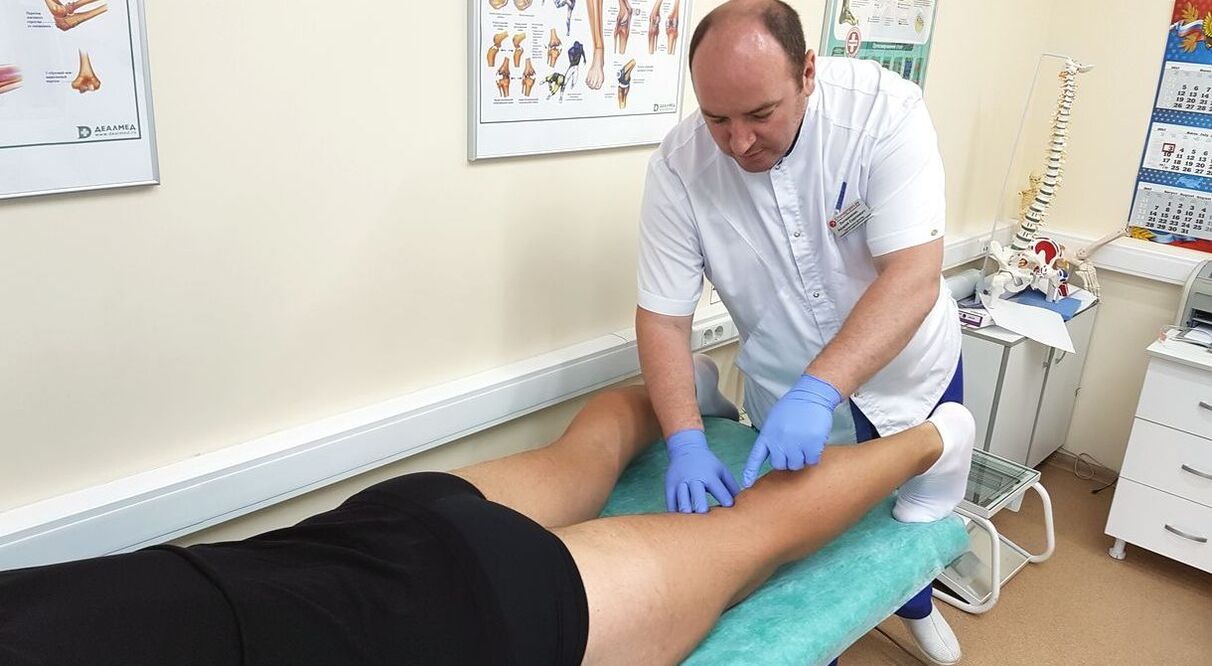
The disease is also known as gonarthrosis (from the Latin genu - knee), osteoarthrosis (as the disease was called before) and osteoarthritis (the term reflects the mechanism of development and modern understanding of the disease).Deforming osteoarthritis of the knee joint has a chronic course and develops over several years.Most patients are over 50 years of age.Women predominate in 2/3 of cases.
How does the disease develop?
Under the influence of external and internal factors, blood supply and tissue nutrition are disrupted, degenerative-dystrophic damage to the articular cartilage develops, with subsequent involvement of the underlying bone in the inflammatory process.The destruction of joint surfaces leads to loss of joint function, limits movement and interferes with the patient's quality of life.
Causes and risk factors
The main reasons for the development of osteoarthritis:
- Heavy physical work.Constant loads on the legs lead to microtraumas of the cartilage and the development of the inflammatory process.At risk are loaders, installers, miners and quarry workers.Often, deforming osteoarthritis affects professional athletes (weightlifters, cyclists, tennis players, football players, basketball players, hockey players, etc.).
- Injuries.Damage to ligaments, tendons, menisci, bruises and fractures lead to disruption of joint biomechanics.If treated incorrectly, it leads to the development of post-traumatic arthrosis.
- Surgical operations on the knee can lead to the development of pathology of the articular cartilage and surrounding tissues.
- Excess weight increases stress on the joints of the lower extremities.Up to 80-90% of the progression of all osteoarthritis is associated with joint overload.
- Old age.In people over 50-60 years old, regenerative processes slow down, collagen production decreases and hormonal levels are impaired.Which leads to the development of pathology.
- Hormonal changes in women.During menopause, estrogen production decreases, which hinders calcium absorption, leads to a weakening of the musculoskeletal system and weakens bones.The risk of developing osteoporosis increases.
- Problems with the thyroid gland.Thyroid hormones are involved in the metabolic processes of calcium and phosphorus in the body.Its deficiency or excess can cause osteoarthritis in the knee.
- Genetic predisposition.Collagen mutation can cause disorders in connective tissue elements, which leads to a deterioration in the shock-absorbing function of articular cartilage.
- Heredity.There is a high probability of developing the disease if the patient's family has relatives diagnosed with gonarthrosis, especially in the female lineage.
- Inflammatory diseases.Infectious arthritis, bursitis, and synovitis caused by bacterial or viral infection are often complicated by the development of gonarthrosis.
- Vascular diseases.Tissues do not receive adequate nutrition, blood supply is impaired, which leads to the development of ischemia and degenerative-dystrophic changes in articular cartilage.
- Poor nutrition and metabolic disorders.Eating foods rich in purines (proteins) contributes to the deposition of salts in the knee, for example, gouty arthritis.
- Specific diseases such as gonorrhea, tuberculosis, syphilis, chlamydia and flu can cause serious damage to joints.
- Intoxication of the body with various chemicals, including some medications.
- Autoimmune diseases are associated with a violation of the body's immune defense when antibodies are produced against its own cells, for example, rheumatoid arthritis.
Symptoms of the disease
The main symptoms of gonarthrosis:
- Joint pain, painful in nature, sometimes at night, in case of exacerbation, severe stitching;
- Cracking and clicking during movement are caused by a violation of the congruity of the articular surfaces, the presence of osteophytes and cartilaginous defects;
- Swelling and swelling are associated with the development of an inflammatory process in the joint and surrounding soft tissues;
- Deformation of the joint space and limb axis indicates disease progression;
- Atrophy and weakness of the thigh muscles, decreased volume of the quadriceps and biceps muscles;
- Limited mobility and joint stiffness are caused by pain, the development of adhesions and the appearance of osteophytes (bone thorns).
The first signs of osteoarthritis that you should pay attention to are pain that occurs during or after exercise.The pain goes away with rest and does not require medication.Morning stiffness in the knee, initial pain, before getting up and walking after sleeping, it takes some time for the joint to develop.
Signs of exacerbation
With the development of pathology, the symptoms of arthrosis become clearer: the knees begin to hurt at rest and at night, during flexion and extension of the joint, strange sounds appear - cracking, popping, popping.Lameness, stiffness of movements develop and swelling of soft tissues appears.
The following facts indicate the progression of the disease:
- the appearance of deformation of the limb axis in the form of O-shaped legs;
- constant nature of pain, pain at night and when the weather changes (meteosensitivity);
- further deterioration of joint mobility, with development of flexion contracture;
- weakness and atrophy of the thigh muscles.
Types and forms of the disease
They exist:
- Primary.It develops as an independent disease.More often, this knee gonarthrosis is associated with age-related changes and heredity.
- Secondary.It occurs against the background of certain diseases or injuries, for example, post-traumatic osteoarthritis.
Depending on the causes, the following types of arthrosis are distinguished:
- Ischemic, associated with problems with blood supply to tissues and vascular disorders;
- Post-infectious is caused by infections, viruses, autoimmune processes;
- The idiopathic nature of the development of the pathology remains unclear;
- Metabolism is associated with metabolic disorders - gout, hemochromatosis, chondrocalcinosis;
- Involutional, as a result of age-related changes in the body;
- Post-traumatic, history of trauma;
- Dishormonal - a consequence of hormonal imbalances in the body.
Development stages
I. Arthrosis of the 1st degree - the initial stage is associated with the deterioration of the quality and quantity of synovial fluid (articular fluid, nourishes the cartilage, has shock-absorbing properties, promotes sliding of the articular surfaces).Malnutrition leads to the wear and tear of cartilage tissue and the appearance of the first signs of inflammation.In the initial phase, movements are not impaired.Patients feel slight pain, tingling, and sometimes joints may creak during movement.Symptoms occur during and after physical activity.Externally, the knee looks quite healthy.
II.Osteoarthritis of the 2nd degree - leads to thinning of the cartilage to 1.5-2.0 mm (normal 2.5-3.0 mm), a narrowing of the joint space is observed and small single bone growths (osteophytes) appear.The inflammatory process is wave-like in nature, alternating between phases of remission and exacerbation.Grade 1-2 gonarthrosis is accompanied by swelling and weakness of the thigh muscles.The pain bothers me at rest, when the weather changes, and after walking I feel tired.Movements become more rigid, morning stiffness and clicking joints appear.It is at this stage that patients consult the doctor most frequently.
III.3rd degree gonarthrosis is manifested by external deformation of the joint, curvature of the axis of the limb.The cartilaginous tissue is severely damaged, thinned to 1-1.5 mm, and exposed bone is visible in places.Bone growths can be easily felt under the skin and range of motion is significantly reduced.At 2-3 degrees of osteoarthritis, the joint space narrows, the joints cannot bend and unfold, all movements are accompanied by pain and clicking, and morning stiffness intensifies.A characteristic joint contracture develops.I'm worried about sharp knee pain, even at rest.Patients often suffer from insomnia due to the fact that they cannot take a comfortable position that does not cause pain and feel changes in the weather.
4. Grade 4 gonarthrosis is characterized by complete destruction of the articular surfaces, the exposed bone is visible and the cartilage is represented by rare “islands”.The joint space is almost invisible.A pronounced O-shaped deformity of the lower extremities and swelling are noticeable.Mobility is almost completely lost.Treatment with non-surgical methods at this stage is ineffective;Joint replacement with an endoprosthesis is indicated.
An orthopedic doctor comments: To accurately determine the degree of arthrosis of the knee joint, in addition to examining the patient, it is extremely important to carry out an instrumental examination (ultrasound, x-ray or MRI of the joint).Bilateral gonarthrosis is very common, so it is recommended to examine the left and right knee joints.This will help you choose the ideal treatment and therefore prevent the disease from progressing.
Diagnosis
To make a diagnosis, it is usually sufficient to perform an x-ray or ultrasound of the knee joint.In difficult cases, laboratory tests and magnetic resonance imaging (MRI) are prescribed.If pathological fluid accumulates in the joint, a puncture and subsequent examination may be required.
Ultrasound diagnostics
It helps to identify the disease at an early stage.It allows measuring the thickness of the cartilage layer, the relief of the joint, the presence of joint fluid, the size of osteophytes and ossifications.
Radiography
Carry out to assess the degree of damage, the condition of bone and cartilage tissue.It will show the presence of osteophytes, narrowing of the joint space and joint deformation.In the early stages of the disease, the examination is not informative.
Analytics
General blood and urine tests, blood biochemistry show signs of inflammation, the presence of infection and disorders in bone and cartilage tissue.They allow you to assess the general condition of the body, determine the causes of the disease, gonarthrosis and exclude pathologies with similar symptoms.
MRI
Magnetic resonance imaging A highly accurate diagnostic method that helps to visualize the smallest changes.It will help with diagnosis both at an early stage and in complex cases before surgical treatment.
Which doctor treats you?
The following specialists treat knee gonarthrosis:
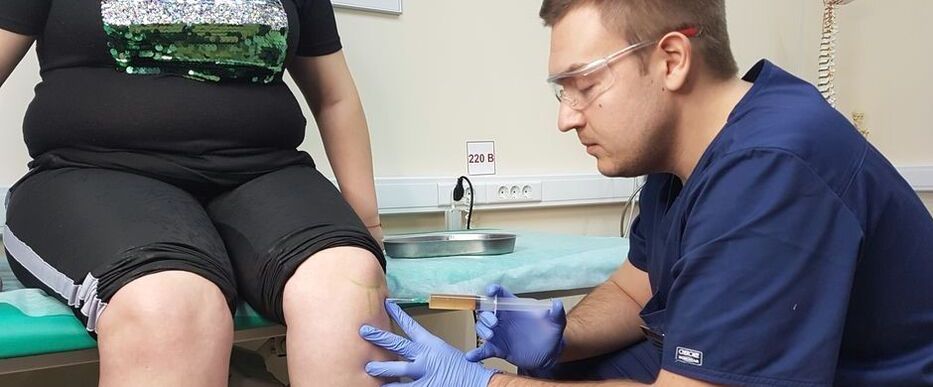
- Orthopedic doctor - diagnoses the disease, intra-articular injections, plasma therapy, provides high-tech assistance and surgical treatment.
- Physiotherapist - responsible for instrumental physiotherapeutic treatment.
- Rheumatologist - will help if the disease is associated with autoimmune diseases.
- Sports doctor - will be requested in case of a history of sports illness.
- A nutritionist is needed if the patient is overweight.
At the recovery stage, the attending physician may involve other specialists:
- Masseuse - massages the lower extremities, restores muscle tone, stimulating blood circulation and helping to restore joint mobility.
- Physiotherapist - selects special exercises and controls their execution.
- Rehabilitation specialist – assists in the patient’s social adaptation;the specialist is especially sought after after serious reconstructive knee surgery.
What treatment is prescribed?
The sooner the disease is detected and treatment of osteoarthritis symptoms begins, the greater the chances of recovery.Otherwise, the disease can lead to irreversible consequences and significantly worsen the quality of life.
Thus, treatment of arthrosis of the knee joint of 1 to 2 degrees has a good chance of completely restoring the function of the knee joint.Unfortunately, patients do not always seek medical help in the early stages.
How to quickly relieve pain and how to treat it?
First of all, it is necessary to eliminate pain and inflammation.Prescribed:
- Nonsteroidal anti-inflammatory drugs (NSAIDs) and analgesics.Medicines allow you to quickly remove inflammation in arthrosis and help reduce pain and swelling.
- Corticosteroids are used when NSAIDs and analgesics do not help, for example, in the treatment of grade 3-4 arthrosis of the knee joint.The patient is given a medication block - medications are injected directly into the joint cavity.This helps to ease the pain and get relief within a few minutes of the injection.
- Special ointments and analgesic patches.
An orthopedic doctor comments: The treatment of osteoarthritis of the knee joint of 2 to 3 degrees is always complex, as a rule, it includes more than 15 (!) points of recommendations in the leaflet.It's not just medicines and injections.This is a whole series of rehabilitation measures aimed at correcting the biomechanics of the joint and the patient's lifestyle.Only this approach will help preserve the joint and prevent the progression of the disease.
Preparations that strengthen bone and cartilage tissue:
- Chondroprotectors based on chondroitin and glucosamine are the nutritional basis of chondrocytes.
- Hyaluronic acid preparations serve as analogues of synovial fluid.
- Medicines that improve microcirculation and blood supply to articular cartilage.
- Calcium and vitamin D supplements strengthen the bones that form the knee joint.
- Intra-articular injections of hyaluronic acid preparations, an artificial analogue of synovial fluid, help lubricate the articular surfaces.
- Medication blocks help quickly relieve swelling, pain and inflammation.As a rule, the effect is noticeable the next day.
Treatment of osteoarthritis of the knee joint also includes physiotherapy:
- Electrophoresis.Using an electrical current, the medicine penetrates the affected area.Electrophoresis is used to treat knee pain due to gonarthrosis.
- Phonophoresis.The medicine enters the area of inflammation under the influence of sound waves.An additional advantage of the method in the treatment of deforming gonarthrosis is the thermal effect.
- Shock wave therapy.The procedure improves blood circulation, stimulates tissue nutrition and is used to destroy osteophytes and scar tissue.
- Traction therapy (joint traction) - helps to unload the joint space, lengthening it by several millimeters, thereby reducing the mutual pressure of the articular surfaces.
- Electromyostimulation - stimulates blood flow and muscle function using electrical current, restores muscle tone.
- Mechanotherapy helps to develop movements in the joint and combat contracture using special robotic simulators.
- Laser therapy creates deep tissue heating and reduces the inflammatory response.
- Magnetotherapy.The therapeutic effect is based on the properties of the magnetic field to reduce pain, inflammation and tissue swelling.
Orthobiological methods aim to stimulate regeneration and replace defects in cartilaginous tissue:
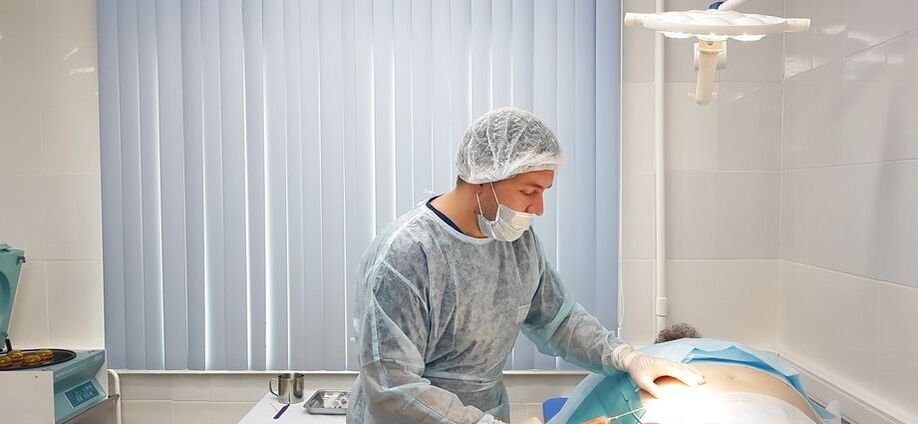
- Plasmolifting is a plasma-based medicine, made from the patient's own blood, which triggers regeneration processes and contains growth factors.
- PRP therapy - plasma obtained from the patient's blood is used as medicine.Platelet-rich plasma stimulates chondrocyte regeneration and alleviates the inflammatory process.
- SVF therapy is based on the use of stromal vascular fraction cells obtained from the patient's own adipose tissue.
- SVF therapy + PRP therapy - the simultaneous use of concentrated plasma and progenitor cells allows you to obtain the best results.
- Stem cell treatment.The method is based on the use of bone marrow cells and is currently under development.
Each case is individual and requires the development of a separate rehabilitation program for the treatment of arthrosis of the knee joint.
Don't know where to treat osteoarthritis?Do you want to get professional help and have treatment without surgery?Register at a health center.We offer to take an examination and start restoring your health the day you contact us.Take advantage of modern knee osteoarthritis treatment at competitive prices.